Friday, July 5, 2019

Native Wildflowers

Hardy plants that thrive in your area, growing in meadows or ditches along roadsides are true native wildflowers. If you are curious about growing some of these plants it only requires you to take a hike along trails or a drive in the country. Our area of Southern Ontario and the surrounding Great Lakes Region is very diverse with many different mixed forests, open grassland, rivers and wildflower habitats. Local wildflowers can be used in a backyard garden to add color, variety and interest because they are easy to care for and already know how to survive well on their own. Choose plants that fit the habitats you already have in your garden. Some will thrive in open full sun while others grow well in shade under trees and shrubs. The site you plant in should mimic their home in the wild.


Wildflowers For Full Sun: Black eye Susan, Blazing Star, Thistles, Tansy, Boneset, Queen Anne Lace, Spurge, Lupine, Campion, Blue  Chichory, Meadowsweet, Yarrow, Plantain, Mullein and Pink or white clover.

Wildflowers For Shady Woodlands: Solomon Seal, Trillium, Jack in the pulpit, Lady’s Slipper, Bleeding Heart, Hepatiea, wood Nettle, Violets, wood sorrel.

 Wildflowers For Wetlands: Celandine poppy, Bloodroot, Dutchman breeches, St John wort, Purple Loostrife, Jacob Ladder. Columbine, Lupine and Liatris are all long lasting wildflowers that grow in most any conditions.


Wildflowers For a Sandy Rockery: Sedum, Milkweed, Campion, Meadowsweet, Honeysuckle, Teasel, Yellow Loostrife, Fall Aster, Pussy Toes, Milkworts, Pasque flower Wildflowers For Dry Shade: Evening Primrose, Cardinal flower, Violet, snakeroot, fleabane daisy Be sure to deadhead all the spent blooms to control seeds from spreading all over your garden.


Tuesday, June 18, 2019

Drying Flowers

It’s much easier today to dry large whole flower heads by using an old window screen. Poke holes in the screen and space out the blooms by inserting them so the stems hang down and the petals lay flat; you can do more for flower projects. Be sure to place books or bricks under the edge to raise your screen up to allow air to circulate from top and bottom. After they are completely dry spray with hair spray or varnish to preserve and help prevent them from falling apart. Try drying chives, marigolds, chrysanthemums, roses, cornflower and aster with this method because they all have large flower heads. All other herbs with small flowers like lavender can be cut and tied into small bunches to be hung up to dry. Place them in a attic, spare room, closet or shed out of direct sunlight for 2 to 5 weeks. Check them often and be sure to leave space between to allow air to circulate between them. Herbs for tea also require a warm dry place if you choose to air dry. You could cut or pick off the leaves, place on a cookie sheet and dry on the lowest setting in an oven. Try mint, parsley and bee balm. Once the leaves are dry store them in a jar out of light.


PRESERVING WITH GLYCERIN is also easy to do for stems of leaves or greenery in arrangements. Buy a bottle of glycerin at your local drug store, mix 2/3 cup to 1/3 cup of boiling water and place in a tall jar. Stand the cut leaf material upright in the jar. Remove all the bottom leaves and make some cuts in the stems to help them absorb the solution. If the leaves are large you may need to use a 50/50 mixture. Place them out of light in a dry place for 2 weeks and check often. It may take some as long as 5 weeks to absorb the solution. Good for preserving whole fern fronds, smaller stems with colorful red leaves like those from Purple sand cherry or gray Lambs Ears.

PRESSING flowers is another way to preserve them for craft purposes and is simple to do with a large amount of books and newspapers. Layer the blooms and leaves you want to press in between paper towels and newspaper to absorb the moisture, then pile some magazines or large books on top to create a press. Leave for a few weeks and check for dryness. You can purchase a press or use the method above as both work just as well. Use pressed flowers to decorate cards, bookmarks, or framed art. Glue to trays, tables or other small furniture to make a bold new look on old or recycled items. Be sure to seal with water based sealer or varnish to protect.

Thursday, June 13, 2019

Seasonal care of the garden

Care for outdoor containers or window boxes, planters, large pots and hanging baskets requires you to remove all the plants. Each spring you can add new soil and plants or replant any perennials you have over wintered. Containers are ideal for balconies, decks and patios but they need more watering than soil gardens, as they dry out quickly. You may need to add time release fertilizer to the potting soil or buy fertilizer that dissolves in water. Try planting a dish garden with herbs or succulents that need very little water or attention for sunny locations. Large containers can be lined with moss to help hold moisture.


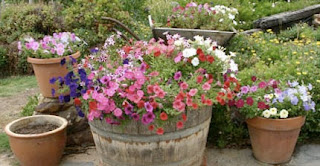
Keep them sheltered from harsh winds and hot direct sun all day. Planters are good for placing in front of fences, walls, drainpipes or other unsightly eyesores. If you plant some drought tolerant plants together they should do well as they are suited for and thrive in dry conditions. They will not need as much care, direct sun or require special soil. Most annuals do fine in tubs, containers or baskets because they are bred to be compact and flower all through the summer season. You can pack a lot together for a big show of color. Below is an example of a window box full of Purple Petunia with a large impact.


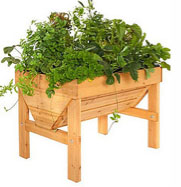
Annuals are easy to care for if you trim off stems that are setting seeds. This promotes branching and new growth so you will have blooms all season. Perennials that bloom at different times can add charm in a large planter, so maintenance is easy. Deadhead the spent blooms once or twice a week to keep your pot garden looking good. Clean out weeds as you see them or apply mulch to cut down on work. Take a walk through the garden daily to look for pests who damage foliage or check out seedlings that may require some extra care or water. On extra hot days they may be stressed and wilting from too much sun. Newly planted seedlings will need water often until they are rooted. This applies to vegetables too. You can group together the plants that have similar needs. Space them close so they won’t dry out as fast. Raised beds are also an option to help reduce watering and keep weeds down to a minimum. If you know some one handy you can have custom planting tables made in any size to fit your needs. These are excellent for growing herbs and veggies, are portable and require little bending.


How to propagate by dividing


Selling extra plants after dividing large over grown clumps can be a way to share with others and even make a little money. You can also trade with other gardeners for plants you don't have. Be sure to label the divisions as you pot them with name and color of blooms.

If you have perennials that are too big for their spot, dividing them is the best option. Splitting the clump is good for the plant if it has stopped blooming because the roots may be so compacted and root bound it needs to be rejuvenated. The best time for dividing is early spring before the plant grows and the leaves are too big. If the perennials flower in spring wait until they are finished to dig up and divide.


1. First dig up the whole root ball and remove most of the soil. Cut off any old roots that look black or show signs of holes from insects feeding.

2. Use a sharp knife, spade or garden forks to pry apart into half and then quarters.

3. Trim off about half the length of the roots to promote new growth. Replant the divisions or pot up to give to friends or sell. Cut off the old flower stems and divide all other plants when the heat of summer is over and the plants can be cut back.

4. It’s best to divide rhubarb in fall time (September) this gives it time to root in before winter.

5. All potted perennials need to be protected over winter. If you want to save them to add to a new garden space in spring you need to have a holding spot in soil to sink them underground to overwinter in the pots. Make sure to put the pots deep enough to just cover the rim of the pot with soil then mound soil up around the crown of the plant. In spring you can dig up the pots to replant the perennials in a new garden or even sell them.


6. Making A New border or island garden? Plan Ahead. The extra plants you have stored in pots may be used in a future garden in the near future. I have become too lazy in my retirement for digging up grass for new flower gardens so to save time I use newspaper, scraps of carpet or dark colored tarp to lay on top of the grass. Layer this in late summer or fall and leave it all through the winter until May when the ground has warmed. Dig it up remove any remaining weeds or grass and add some compost or manure. Wait a couple of weeks and rake again to be sure all is cleared, then plant the perennials you have saved in pots.

Friday, May 10, 2019

Some history of gardening

THE FIRST FARMERS The origin of shaped and designed gardens dates back to around 3000 BC when the Egyptians farmed and built elaborate temples. The great palaces were decorated with potted topiary trimmed in fancy shapes made of box hedges. The designs were liked by traveling visitors and began to move into countries like Italy, Spain and Greece. Great cities like Rome had some knowledge of landscape design and engineering as far back as AD400. Through centuries of history people who gardened enjoyed turning open land into parks and play areas. Over time cities formed with homes featuring courtyards for growing fruit trees, herbs and vegetables. As the explorers traveling to new world's encountered many plants, they traded seeds, bulbs, spices with others. This enabled the spread of floral collections to move west across Europe and Britain. Devoted gardeners like monks had herbs, trees and food crops. They made wine, medicines and helped farmers with advice on crops to improve production. The first monks were like the master gardeners of the time.

Plants also were used for dyes on the hair, face and for cloth. The monks were the doctors who made medicinal teas from plants they grew, colored ink for recording history, recipes for healing and how to season food as well. Drying the herbs made it easier for them to preserve for making medicine. Many were pickled in a vinegar brine and to flavor wine too.


GARDEN HISTORY BY DESIGN The greatest thing ever in nature is to observe seeds go to plant and bloom in stages. We tend the plant for as long as it's alive in our garden. The seed knows what to do all on its own. The gardener simply chooses a style he wants to use to express by arranging the plants and choosing his or her personal beauty. That is why gardeners find this to be an interesting and satisfying hobby. We tend and feel responsible for the living plants. This can often become an obsession. Some of the oldest plants are still the toughest, most dependable plants to begin with if you are a new gardener. The cottage gardens were definitely very useful to help people be self sufficient. The plants grown varied and included fruits, vegetables, herbs and flowers all enclosed in a fenced or walled in area. This was a very easy way to keep pests out.

Attracting birds

You can hang a feeder in the garden to see who comes to visit, but also consider what else the birds might need. Flowers with nectar, seeds they like and berries for winter food. Birds like to drink at water features and cool off in birdbaths. They need trees and shrubs for perches and protection from wind. Native plants attract birds and supply some food as well.


Many birds help by eating flying pests in your garden. Nature lovers and birdwatchers can view birds simply by providing food and shelter for them all year round. Some birds stay the winter and will keep visiting if food is near. Start to place some seed out in fall just before winter sets in. Continue to fill the feeders every week until spring. That's when the birds can find plenty to eat on their own. By planting evergreens like pine, spruce and cedar you can provide nesting and roosting sites. The seeds from ornamental grasses are eaten by finches and chickadee. They will nest in the tall grass. They like native plants like thistles, Coneflower, Milkweed so leave the flower head on the plants to provide some seeds. Dill, parsley, corn, fennel and carrot all provide good seeds for birds. It's simple to add a hedge row of raspberries, serviceberry, choke cherry, highbush cranberry, crab apple or grape to provide a wind break as well as food and shelter for birds. Cut off the whole head of your sunflowers and tie to a fence or hang from low branches of trees to feed the birds. Use recycled objects to fill with suet and seeds for hanging bird feeders.


Thick rows of rose bushes, dogwood, snowberry, currents or willow added to a hedge to provide food and perches for birds. Always leave the trimming and cleanup until spring. Common birds like Blue Jay, Cardinal, Goldfinch, Junco, Grosbeak, Chickadee and Sparrow all enjoy most sunflower and mixed seeds. Add these to bacon fat and peanut butter to coat logs or pine cones. Hang the treats out on branches close to a window and watch them enjoy. Hummingbirds are so fast and so tiny you might not know you have some visiting unless you're looking for them. By planting their favorite nectar plants and choosing red and orange bloom colors you will have success in attracting some hummingbirds. They feed 3 to 5 times a day on nectar from tube shape flowers like coral bells, trumpet vine, columbine, Salvia, Penstemon and Canna lily.

Saturday, May 4, 2019

Shade gardens

Shade gardens are those planted and grown in areas that get very little or no direct sunlight. They are often under trees or along buildings and fences. The challenge is to find plants that thrive in the shade you have. It may be cool, damp, dry or very wet. Plants not suited for the shade tend to grow tall and leggy. Most herbs and vegetables don't do well in mostly shady gardens. Some ground covers and woodland plants do very well in shade. Try Lamium and Euonymus under a tree or up a shady fence or wall. These can be used instead of grass as it is often difficult to grow grass because the tree will take all the moisture available. Shady spots are also ideal for seating areas, small patios, courtyards, birdbaths or water features.

THE PLANTAIN LILY is a very attractive plant with large light green leaves. It generally flowers in late summer right up until the frosts hit in late October. They don't require any special soil, grow in wet or dry shade, can be under planted with trees or shrubs and have large showy blooms with a strong fragrance like other lilies.


 Many of the shade loving plants have large leaves with small blooms. Pick foliage with interesting textures, sizes and colors to break up all the green. Spring bulbs do well under deciduous trees because they emerge and bloom before the tree leafs out and then die back and disappear. Plant your spring bulbs in between the bigger perennials in order to have continued color in spring, early to mid summer and later in August right up to fall. Do this by choosing those that bloom at different times. The bulbs like tulip and daffodil, bloodroot and bergenia take care of May into June, then the Iris, Solomon seal, spiderwort, Ferns, some variety of Hosta and Plantain Lily take over for July into August. Penstemon, Monkshood and virginia creeper all put on a show late of color in summer right up to the first frost in fall. It's not difficult to have a very showy border in a mostly shady location.

PLANTS FOR PART SHADE: Brunnera, Spiderwort, Ferns, Phlox, Hosta, painted fern, Ajuga, Bloodroot, Periwinkle, Bergenia, Honeysuckle, Dogwood, Mock orange, Lily of the valley, Hydrangea and creeping juniper and EUPHORBIA are hardy perennials that have white, blue, pink, red or yellow blooms. Many of these also are very scented or come in varieties with variegated leaves.

 MASTERWORT is another hardy one with 24 inch stems of pink blooms in mid summer. A beardless iris like the Japanese or Siberian variety do well in damp soil and along the edge of water ponds.

 RODGERSIAS have large leaves with 24 inch stems of cream plumes. HOSTA come in plain or variegated leaf, large or small varieties and are some of the easiest perennials to grow and maintain.

 LIGULARIA have reddish leaves in spring with 36 inch tall purple stems and bright yellow blooms.